Category: Symptoms and Conditions

Diarrhea in Pets: Main Causes, First Aid, and When a Clinic Visit Is Needed

Diarrhea in pets is not a disease by itself. It is a symptom that can appear with a mild digestive upset, but it can also be a sign of infection, inflammation, poisoning, parasites, food intolerance, or a more serious internal problem. A dog or cat may have one short episode of loose stool after a diet change or eating something inappropriate, and sometimes that improves quickly. However, if diarrhea becomes frequent, watery, foul-smelling, contains mucus or blood, or appears together with vomiting, weakness, dehydration, abdominal discomfort, or refusal to eat, it is no longer something owners should ignore. In such situations, arranging an examination at a veterinary clinic is the safer decision. Many owners try to decide whether diarrhea is “serious enough” based only on the stool consistency. In reality, the seriousness of the situation depends on much more than that. It matters how often the diarrhea occurs, how long it has been continuing, whether the pet is still drinking water, whether appetite has changed, whether vomiting is present, whether the pet looks tired or uncomfortable, and whether there are signs of dehydration or pain. The same symptom may come from a mild temporary dietary problem in one case and from a dangerous condition in another. Some pets are also more vulnerable than others. Kittens, puppies, senior animals, and pets with chronic disease can lose fluid much faster and weaken sooner than a healthy adult animal. That means a period of diarrhea that might be tolerated by one pet may become much more serious in another. This is especially important if diarrhea appears together with loss of appetite, repeated vomiting, or unusual lethargy. In this article, we explain why dogs and cats develop diarrhea, when short home observation may be acceptable, when a veterinary visit is already needed, what owners can and should not do before the visit, and what tests may be necessary to identify the cause. The key point is simple: diarrhea is common, but it should never be treated automatically as harmless without looking at the pet’s overall condition. Why Dogs and Cats Develop Diarrhea There are many causes of diarrhea in pets, and not all of them are minor. One of the most common reasons is diet-related irritation. A dog or cat may develop loose stool after a sudden food change, eating table scraps, overeating treats, consuming spoiled food, or getting into trash. Some pets have sensitive digestion and react quickly even to small dietary deviations. In these cases, diarrhea may be short-lived, but it still deserves attention because even a mild digestive upset can become worse if the triggering factor continues. Another important group of causes includes intestinal inflammation and infection. Viral disease, bacterial overgrowth, parasites, and inflammatory digestive problems can all lead to diarrhea. In those cases, stool changes are often accompanied by weakness, reduced appetite, nausea, vomiting, abdominal sounds, abdominal pain, or fever. Some owners assume that diarrhea caused by infection must always look dramatic right away, but that is not always true. Sometimes the first noticeable sign is simply that the stool becomes softer and more frequent before the pet begins to look obviously ill. Food intolerance and dietary sensitivity can also play a major role. Some animals react poorly to certain proteins, ingredients, fats, or food additives. In these cases, diarrhea may come and go, become recurrent, or appear together with bloating, gas, stomach noises, or unstable appetite. Repeated loose stool in a pet that otherwise seems “not too bad” can still point to a chronic dietary issue that deserves proper evaluation rather than endless trial and error at home. Diarrhea may also appear as part of systemic disease. Problems involving the pancreas, liver, intestines, metabolic balance, or other internal organs may affect the digestive tract and cause abnormal stool. This is one reason why diarrhea that persists, worsens, or keeps returning should not simply be blamed on food every time. If the pet is showing repeated digestive signs, the real cause may be deeper than a short-term stomach upset. Another cause to remember is toxic exposure. Household chemicals, medications for humans, inappropriate foods, some plants, and other harmful substances may cause diarrhea, often together with vomiting, weakness, drooling, tremors, or behavioral change. If there is any suspicion that the pet has had access to something unsafe, owners should not treat the diarrhea as an isolated problem. In such cases, prompt veterinary attention is far more important than trying home remedies first. Finally, diarrhea may be just one symptom in a bigger picture. It may be linked to vomiting, dehydration, abdominal pain, appetite loss, or lethargy, which changes the level of concern significantly. This is why the correct approach is not only to ask, “Why is the stool loose?” but also to ask, “What else is happening with the pet?” When Home Observation May Be Reasonable and When a Vet Visit Is Already Needed Not every episode of diarrhea means an emergency, but every episode should be assessed properly. If an adult dog or cat has one short period of loose stool, remains active, keeps drinking water, shows no vomiting, no blood in the stool, no clear pain, and no major behavior change, brief home observation may sometimes be acceptable. But that observation needs to be real. Owners should monitor how often the pet defecates, whether the stool improves or worsens, whether water intake remains normal, and whether new symptoms appear during the next several hours. The situation changes if diarrhea becomes frequent, persistent, or more severe. If the stool turns very watery, the pet goes repeatedly, there is mucus or blood, or the pet starts to look tired, withdrawn, or uncomfortable, home observation becomes much less appropriate. Repeated diarrhea can lead to fluid loss and electrolyte imbalance faster than many owners expect, especially in smaller or more vulnerable pets. Appetite and water intake are very important clues. If diarrhea appears together with refusal to eat, vomiting, or reduced drinking, concern rises significantly. A pet that is losing fluids from
Read More »

Vomiting in a Dog or Cat: When to Observe and When to See a Vet Urgently

Vomiting in a dog or cat is never a symptom that should be ignored, even though it does not always mean a life-threatening emergency. Some pets may vomit once because they ate too fast, changed food too quickly, swallowed hair, or had a mild temporary stomach irritation. However, if vomiting repeats, happens together with weakness, hiding, loss of appetite, diarrhea, abdominal pain, dehydration, or any clear change in behavior, the pet should be examined at a veterinary clinic. The practical rule is simple: if vomiting does not look like a single mild episode or your pet does not seem normal afterward, it is safer not to wait too long. Many owners try to understand whether the problem is minor or dangerous based only on the number of vomiting episodes. In reality, the seriousness of vomiting depends on much more than that. It matters how often it happens, what the vomit looks like, whether water stays down, whether the pet is still interested in food, whether there is diarrhea, weakness, pain, bloating, or breathing changes, and how quickly the overall condition changes. The same symptom may be caused by mild dietary irritation in one case and by a much more serious internal problem in another. Particular caution is needed if a kitten, puppy, senior pet, or chronically ill animal is vomiting. These patients may become dehydrated much faster and can deteriorate sooner than healthy adult pets. The same is true if the pet refuses food, cannot keep water down, becomes quiet and withdrawn, or looks increasingly weak. In those situations, waiting at home for too long may make later treatment more difficult. In this article, we explain why dogs and cats vomit, when home observation may be acceptable, which warning signs mean a veterinary visit should happen quickly, what owners should and should not do at home, and what examinations may help identify the cause. The goal is not only to answer when vomiting is dangerous, but to help owners understand why repeated vomiting should be evaluated in context rather than treated like a simple stomach upset every time. Why Dogs and Cats Vomit There are many possible causes of vomiting in pets, and not all of them are related to eating “something wrong.” One of the mildest causes is simple stomach irritation. A dog may eat too quickly, swallow air, overeat, or react badly to a sudden food change. A cat may vomit because of hair ingestion, stress-related nausea, or a sensitive stomach. In such cases, vomiting may happen once and then stop, especially if the pet quickly returns to normal behavior, drinks water, and regains interest in food. Even then, the episode should still be taken seriously enough to watch for change. Another large group of causes involves gastrointestinal disease. Gastritis, enteritis, pancreatitis, food intolerance, intestinal inflammation, parasites, and irritation caused by spoiled food or inappropriate items can all lead to vomiting. In those cases, owners may also notice lip licking, swallowing motions, drooling, refusal to eat, abdominal discomfort, bloating, or diarrhea. Sometimes vomiting is not the only digestive sign but simply the first symptom owners notice. Vomiting can also be linked to swallowing a foreign object. Dogs are especially known for eating toys, bones, socks, packaging, sticks, or other non-food items, but cats can also swallow threads, string, small objects, and household materials. If a foreign body is involved, vomiting may repeat, become unproductive, happen after drinking, or be associated with pain, weakness, or restlessness. In such cases, imaging such as radiography or ultrasound may be needed quickly. Systemic illness is another important category. A dog or cat may vomit because of kidney disease, liver problems, pancreatitis, endocrine disorders, infection, fever, severe pain, toxin exposure, or other internal conditions. Owners sometimes expect these diseases to look very specific, but in many cases vomiting is one of the first outward signs that the body is under stress. That is why repeated vomiting should not automatically be explained away as “just a stomach issue.” Poisoning must also be considered. Household chemicals, medications for humans, toxic foods, spoiled products, certain plants, and some inappropriate pet products can all cause vomiting. In these situations, vomiting may begin suddenly and may come together with drooling, weakness, trembling, restlessness, collapse, or unusual behavior. If there is any reason to suspect toxic exposure, home treatment should not replace urgent veterinary assessment. It is also helpful to distinguish vomiting from regurgitation. Regurgitation often happens soon after eating, with little abdominal effort, and the food may come up largely undigested. Vomiting usually involves nausea, abdominal contractions, discomfort, and more active expulsion. Owners do not always need to identify this perfectly themselves, but noticing the difference can help the veterinarian understand which body system may be involved. When You Can Observe at Home and When a Vet Visit Is Already Needed Home observation may be possible in some mild cases, but only under limited conditions. If vomiting happens once, the pet remains active, drinks water normally, shows no sign of pain, has no diarrhea, does not refuse all food, and behaves as usual afterward, careful observation for a short period may sometimes be reasonable. But observation should not mean ignoring the problem. It means checking whether vomiting happens again, whether water stays down, whether appetite returns, and whether any new symptoms appear. If a dog or cat vomits more than once, the situation already becomes more significant. Repeated vomiting often means the problem is not just a brief irritation. If vomiting continues over several hours, occurs after eating or drinking, or happens together with increasing weakness, the risk of dehydration grows quickly. The longer the vomiting continues, the less reasonable it becomes to rely only on home monitoring. Water tolerance is especially important. If a pet drinks small amounts and keeps them down, the situation may still be more stable than one in which every attempt to drink triggers another episode. If a pet vomits after water, refuses water, or becomes obviously dehydrated, prompt veterinary evaluation is

Read More »

Itching, Skin Redness, and Rash in Pets: When a Veterinary Dermatologist Is Needed

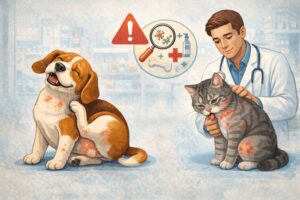
Itching, skin redness, and rash in pets should never be treated as a minor cosmetic issue only. In some dogs and cats, mild irritation may appear for a short time because of a temporary trigger such as contact irritation, seasonal factors, or a brief skin reaction. But if a pet keeps scratching, licking, chewing paws, rubbing the face, shaking the head, or develops red skin, bumps, scabs, patches of hair loss, or an unpleasant skin odor, it is already time to think about a proper veterinary dermatology consultation. These symptoms often point not to one simple problem, but to a whole group of possible causes, including allergy, parasites, bacterial or fungal infection, chronic skin inflammation, or ear disease. Many owners first try to solve the issue on their own. They switch shampoos, use random skin products, try antihistamines, change food without a plan, or simply wait to see whether the skin improves by itself. This is one of the most common mistakes in pet dermatology. Skin problems often look similar on the surface but come from very different causes. A dog or cat with constant itching may have flea allergy dermatitis, food-related allergy, environmental allergy, skin infection, mites, ear inflammation, or a chronic allergic skin disease. If the treatment is chosen by guesswork, the result is often temporary or ineffective, while the real cause continues to worsen. It is also important to understand that the skin rarely becomes inflamed “on its own” without an underlying reason. In many pets, the visible skin problem is only the outer sign of a deeper issue. If a pet is scratching all the time, it usually means the skin barrier is damaged, inflammation is active, and secondary complications may already be developing. Over time, constant self-trauma can lead to wounds, bacterial overgrowth, yeast infection, chronic thickening of the skin, dark discoloration, ear disease, and a much more difficult treatment process. In this article, we explain why dogs and cats develop itching, skin redness, and rash, when these symptoms require a veterinary dermatologist, which warning signs should not be ignored, what owners should not do at home, and what diagnostics may be needed. The main idea is simple: with skin disease, the goal is not only to make the redness disappear, but to identify what is driving the inflammation in the first place. Why Dogs and Cats Develop Itching, Red Skin, and Rash There are many possible causes of skin symptoms in pets, and this is exactly why dermatology cases should not be treated casually. One of the most common reasons is allergy. In dogs and cats, skin inflammation may develop because of flea bites, food-related triggers, environmental allergens such as dust or pollen, or a broader allergic skin disease. In those cases, the pet often does not scratch occasionally. Instead, scratching becomes frequent, repetitive, and focused on certain areas such as the ears, face, paws, belly, groin, tail base, or sides of the body. Over time, the skin becomes red, irritated, and damaged from constant licking, chewing, and scratching. Another major category is parasitic skin disease. Even if an owner does not see fleas or other parasites, that does not mean parasites are not involved. Some pets react so strongly to flea bites that even minimal exposure can trigger severe itching and inflammation. In addition to fleas, mites and other parasites may cause redness, scaling, crusting, hair loss, and strong discomfort. Without proper skin examination, these conditions are easy to confuse with allergy or infection. That is one reason why dermatologic evaluation often needs more than visual inspection alone. Bacterial and yeast infections are also extremely common in itchy pets. Sometimes they are the primary issue, but very often they develop secondarily on top of allergic or damaged skin. When that happens, owners may notice a stronger smell, greasy fur, red irritated folds, pustules, crusts, moist skin lesions, or darkened thickened areas. These secondary infections are important because even if the original trigger is allergy, the infection itself can make the pet itch much more severely. A dog with an allergic background may look dramatically worse once infection is added to the picture. Ear problems are another very important part of the same dermatologic pattern. A dog or cat that constantly shakes the head, scratches around the ears, develops discharge, redness, or odor may not have a separate unrelated ear problem. Very often, the ears are part of the same underlying allergic or inflammatory disease affecting the skin. Owners sometimes focus only on the ear signs and miss the fact that the paws, belly, armpits, groin, or face are also involved. Skin symptoms can also be linked to contact irritation, grooming-related issues, chronic skin barrier damage, hormonal factors, or improper home care. Overbathing, harsh shampoos, inappropriate topical products, or “human” creams can worsen inflammation rather than help it. That is why home treatment based on general assumptions often delays the correct diagnosis instead of improving the condition. The key point is that itching, redness, and rash are not a diagnosis by themselves. They are outward signs of inflammation. To treat the pet properly, the real cause has to be identified rather than guessed. When Itching and Rash Mean a Veterinary Dermatologist Is Needed Not every short episode of scratching means a serious skin disease, but there are clear situations where waiting is the wrong choice. If a pet scratches once in a while and the skin still looks normal, with no redness, no odor, no rash, no hair loss, and no repetitive licking or chewing, short observation may sometimes be reasonable. But once the scratching becomes regular, intense, or linked to visible skin changes, the situation is no longer something to postpone for long. One of the clearest signs that a veterinary dermatologist is needed is constant or recurrent itching. If a dog or cat repeatedly licks paws, scratches the neck, rubs the face, chews the skin, shakes the head, or seems unable to settle because of skin discomfort, this is not normal

Read More »

Your Pet Is Lethargic, Hiding, or Breathing Heavily: Warning Signs You Should Not Ignore

If your pet is lethargic, hiding, or breathing heavily, this should not be dismissed as a simple mood change or temporary tiredness without proper attention. In some cases, a dog or cat may appear quieter than usual because of stress, poor sleep, mild discomfort, or a short-lived reaction to an unusual day. However, if a pet suddenly becomes inactive, avoids contact, hides in corners or under furniture, refuses food, or shows abnormal breathing at rest, this may be an early sign of pain, infection, intoxication, heart disease, respiratory distress, internal inflammation, or another serious medical problem. In these situations, the safest step is to arrange an appointment with a veterinarian or visit a veterinary clinic for assessment. Many owners notice the change gradually. At first, the pet may simply seem “a little off.” Then it becomes less social, less playful, less interested in food, and more likely to stay in one place. Some pets stop greeting their owners, stop reacting to normal household activity, or choose unusual hiding places. Others begin to breathe faster, more shallowly, or with visible effort. These signs matter because lethargy, hiding, and heavy breathing are not diseases by themselves. They are clinical symptoms that often reflect the body reacting to something significant. These changes are especially concerning when they appear together. A pet that is not only quiet, but also refuses to eat, hides, breathes faster than usual, or looks uncomfortable should be taken very seriously. The same applies if these signs develop in a kitten, puppy, senior pet, or an animal with a known chronic condition. In these patients, deterioration may happen faster and the reserve to compensate is often lower. In this article, we explain why a dog or cat may become lethargic, hide, or breathe heavily, which symptoms require more urgent action, what owners can do before reaching the clinic, and what examinations may be needed. The main message is simple: if your pet’s behavior and breathing change noticeably and the condition does not look clearly mild and temporary, it is safer to act early rather than wait for the problem to become obvious and severe. What Lethargy, Hiding, and Heavy Breathing May Mean Lethargy in pets is more than just sleeping a little longer. It usually means a clear drop in normal energy, interest, responsiveness, and willingness to do usual activities. A dog that normally reacts to walking, food, toys, or attention but suddenly lies down most of the time and seems uninterested is not simply “resting.” A cat that stops moving around the home, stops grooming normally, or avoids interaction may also be signaling that something is wrong. Lethargy is one of the most important general warning signs in veterinary medicine because it often appears early in many different illnesses. Hiding behavior is especially important in cats, but it can also be meaningful in dogs. When a pet retreats under a bed, behind furniture, into a closet, or into another unusual quiet place, this often reflects discomfort, fear, pain, weakness, or a desire to avoid stimulation. In the wild, animals often hide when they are vulnerable. That instinct can still appear strongly in domestic pets. Owners sometimes interpret hiding as emotional behavior only, but in a medical setting it often deserves careful attention. Heavy or labored breathing is one of the most serious symptoms in this group. It may look like rapid breathing at rest, exaggerated chest or abdominal movement, open-mouth breathing, noisy breathing, extended neck posture, flared nostrils, or visible effort to inhale. Some pets may breathe fast because of pain, fever, anxiety, or overheating. Others may do so because of heart disease, lung disease, airway obstruction, fluid in the chest, anemia, allergic reaction, severe weakness, or other internal problems. That is why any clear breathing change should be evaluated carefully and never brushed aside. These three signs often overlap because the body responds as a whole. A pet in pain may move less, seek isolation, and breathe faster. A pet that lacks oxygen may become weak, anxious, quiet, and unable to settle. A pet with serious abdominal disease may hide, refuse contact, and breathe differently because of pain and systemic stress. In other cases, breathing changes may come from the chest, while the lethargy and hiding are secondary responses to how unwell the pet feels. This is exactly why these symptoms do not point to one single diagnosis, but they do strongly suggest that the pet is not in a normal state. The timing of the change also matters. If a pet was normal earlier in the day and then becomes clearly weak, withdrawn, or abnormal in breathing within a short time, this is usually more worrying than a long-standing mild behavior difference. Sudden progression is always a reason to be more cautious. The same applies when the symptoms are increasing over hours, for example from reduced activity to refusal of food and then to more obvious breathing effort. Because these symptoms can reflect many serious conditions, they should not be interpreted casually. They are among the most important reasons owners seek urgent veterinary advice, and early recognition often makes the difference between a manageable problem and a crisis. Main Reasons a Pet Becomes Lethargic, Hides, or Breathes Heavily There are many possible causes for this combination of symptoms, ranging from moderate illness to true emergencies. One of the most common and important causes is pain. Dogs and cats do not always cry out or show obvious dramatic signs when something hurts. Instead, they often become quiet, withdrawn, less willing to move, less interested in food, and more likely to hide. Pain may come from the abdomen, chest, joints, mouth, spine, urinary tract, injury, inflammation, or internal organs. If breathing becomes faster or more tense at the same time, this may be the body’s response to ongoing pain. Another major category includes infection and systemic inflammation. When a pet develops fever, infection, or strong inflammatory stress, it often becomes weak, wants to lie down, and loses interest

Read More »

Dog or Cat Refuses to Eat: When It Is Dangerous and What to Do

If your dog or cat refuses to eat, it does not always mean there is an emergency, but it is never a symptom that should be ignored. Some pets may eat less for a short time because of stress, a diet change, hot weather, mild stomach upset, or temporary discomfort. However, if a pet refuses food for longer than usual, becomes weak, hides, vomits, has diarrhea, seems painful, or shows any change in normal behavior, it is important to arrange an examination at a veterinary clinic. The main rule is simple: if your pet is not eating and does not look well, waiting too long is a mistake. Appetite is one of the most useful indicators of a pet’s general condition. Owners often notice a loss of appetite before they see anything else clearly wrong. In some cases, a dog or cat may walk toward the bowl, sniff the food, and walk away. In others, the pet ignores both food and favorite treats. Sometimes the pet actually wants to eat but cannot do so comfortably because of nausea, mouth pain, dental disease, weakness, or abdominal discomfort. That is why it is important to pay attention not only to the fact that the pet is not eating, but also to how long this has been happening, whether water intake has changed, and whether other symptoms appeared at the same time. Age, species, and underlying disease also matter. A healthy adult pet skipping one meal is not the same as a kitten, puppy, senior pet, or an animal with chronic illness refusing food. In small or vulnerable patients, a short period without normal food intake may become serious much faster. Some pets can deteriorate because of dehydration, weakness, low energy intake, or worsening of the underlying illness. That is why there is no universal advice to “just wait a day or two” for every animal. In this article, we explain why a dog or cat may refuse to eat, when careful observation at home may be reasonable, when a veterinary visit is already needed, what owners should not do on their own, and which examinations may help identify the cause. The goal is not only to answer whether reduced appetite is dangerous, but to help owners understand when a loss of appetite may be the first warning sign of a more serious problem. Why a Dog or Cat Refuses to Eat There are many reasons why a pet may stop eating, and they range from relatively mild to potentially dangerous. One of the most common mistakes owners make is assuming the pet is simply being picky. In reality, a reduced appetite can be linked to nausea, pain, stress, dental disease, gastrointestinal irritation, inflammation, infection, toxic exposure, metabolic disease, or internal organ problems. In other words, a loss of appetite is usually not the disease itself. It is a symptom, and the real question is what stands behind it. A common cause is stress. Dogs and cats may eat less after a move, travel, grooming, a new animal at home, loud events, changes in routine, visitors, construction noise, or even smaller changes in their environment. Cats in particular may react strongly to changes that humans consider minor, such as a new feeding location, a different smell in the house, or changes around the litter tray. In those situations, reduced appetite may improve once the pet relaxes. Still, even stress-related appetite loss should not be ignored if it lasts too long or if the pet starts showing other symptoms. Another important group of causes includes mouth and dental problems. A pet may approach food and appear interested, but then avoid chewing because eating is painful. Gum inflammation, broken teeth, severe tartar buildup, mouth ulcers, oral injury, and other painful conditions can all reduce food intake. Owners may also notice drooling, chewing on one side, pawing at the mouth, dropping food, or a bad smell from the mouth. In such cases, appetite loss is not about the pet refusing food mentally. It is often about the pet being unable to eat normally. Digestive problems are also very common. A dog or cat may refuse food because of nausea, gastritis, intestinal irritation, pancreatitis, dietary intolerance, swallowing something inappropriate, or a developing gastrointestinal disorder. Sometimes appetite loss appears together with lip licking, swallowing motions, drooling, vomiting, bloating, abdominal pain, or diarrhea. In some patients, nausea is strong enough that they will reject even favorite treats. When that happens, it becomes much less likely that the issue is simple fussiness. It is also important to consider systemic illness. Pets may stop eating because of fever, pain, infection, liver disease, kidney problems, pancreatic disease, endocrine disorders, or other internal conditions. In many cases, the loss of appetite appears before the owner can identify a specific problem. That is why ongoing refusal to eat without an obvious harmless explanation should always be taken seriously. Behavioral and feeding factors do sometimes matter as well. A pet may be reluctant to eat after an abrupt food change, after too many treats, or after being fed table scraps. Still, these possibilities should not be used too quickly to dismiss the symptom. The most important question is not only whether the pet is refusing its usual food, but whether its appetite is reduced overall and whether its general condition has changed. When You Can Watch at Home and When a Vet Visit Is Needed Not every reduced appetite requires immediate panic, but every case requires attention. If an otherwise healthy adult dog or cat skips one meal, continues drinking water, remains active, and has no vomiting, diarrhea, weakness, pain, breathing changes, or unusual behavior, short observation at home may sometimes be acceptable. But “observation” should mean real monitoring. Owners should pay attention to water intake, interest in food, normal urination and bowel movements, level of activity, and whether the pet behaves as usual over the next hours. If a dog or cat is not eating for longer than expected, the situation changes. If

Read More »

Make a call:

About us

Understands without words. Our clinic offers a full range of veterinary services, including its own laboratory, trips around the city and region, as well as special offers for shelters. Provide your pets with the best care with us!

Order of the State Production and Consumer Service №65 of 07.02.2022 on the decisions made regarding the issuance of a license for the conduct of business activities in veterinary practice.

© 2021 hab.vet