
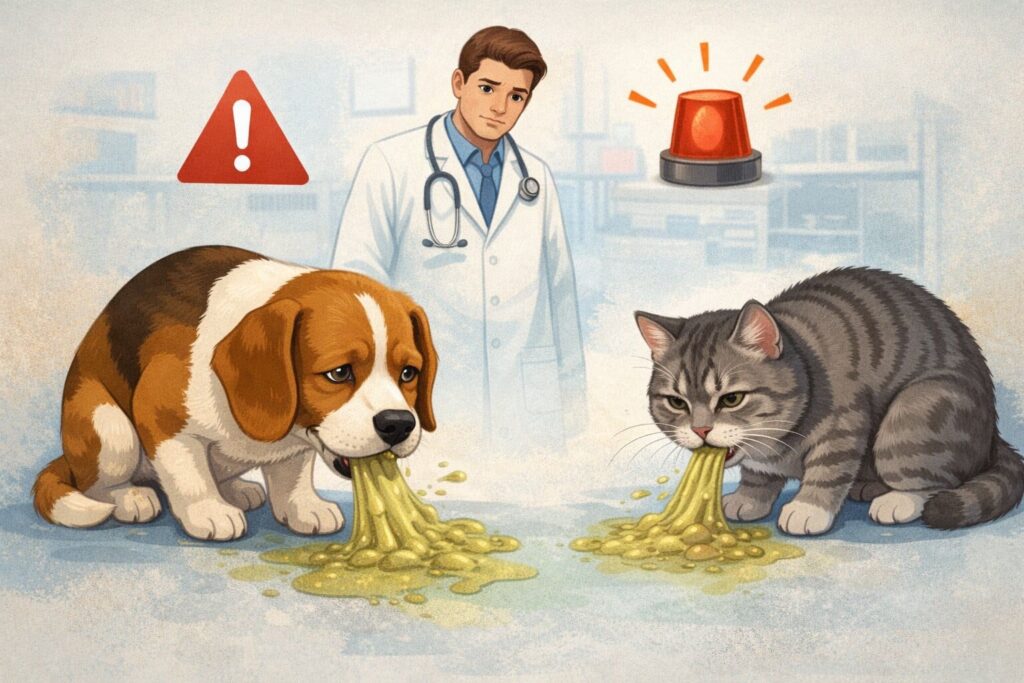
Vomiting in a dog or cat is never a symptom that should be ignored, even though it does not always mean a life-threatening emergency. Some pets may vomit once because they ate too fast, changed food too quickly, swallowed hair, or had a mild temporary stomach irritation. However, if vomiting repeats, happens together with weakness, hiding, loss of appetite, diarrhea, abdominal pain, dehydration, or any clear change in behavior, the pet should be examined at a veterinary clinic. The practical rule is simple: if vomiting does not look like a single mild episode or your pet does not seem normal afterward, it is safer not to wait too long.
Many owners try to understand whether the problem is minor or dangerous based only on the number of vomiting episodes. In reality, the seriousness of vomiting depends on much more than that. It matters how often it happens, what the vomit looks like, whether water stays down, whether the pet is still interested in food, whether there is diarrhea, weakness, pain, bloating, or breathing changes, and how quickly the overall condition changes. The same symptom may be caused by mild dietary irritation in one case and by a much more serious internal problem in another.
Particular caution is needed if a kitten, puppy, senior pet, or chronically ill animal is vomiting. These patients may become dehydrated much faster and can deteriorate sooner than healthy adult pets. The same is true if the pet refuses food, cannot keep water down, becomes quiet and withdrawn, or looks increasingly weak. In those situations, waiting at home for too long may make later treatment more difficult.
In this article, we explain why dogs and cats vomit, when home observation may be acceptable, which warning signs mean a veterinary visit should happen quickly, what owners should and should not do at home, and what examinations may help identify the cause. The goal is not only to answer when vomiting is dangerous, but to help owners understand why repeated vomiting should be evaluated in context rather than treated like a simple stomach upset every time.
Why Dogs and Cats Vomit
There are many possible causes of vomiting in pets, and not all of them are related to eating “something wrong.” One of the mildest causes is simple stomach irritation. A dog may eat too quickly, swallow air, overeat, or react badly to a sudden food change. A cat may vomit because of hair ingestion, stress-related nausea, or a sensitive stomach. In such cases, vomiting may happen once and then stop, especially if the pet quickly returns to normal behavior, drinks water, and regains interest in food. Even then, the episode should still be taken seriously enough to watch for change.
Another large group of causes involves gastrointestinal disease. Gastritis, enteritis, pancreatitis, food intolerance, intestinal inflammation, parasites, and irritation caused by spoiled food or inappropriate items can all lead to vomiting. In those cases, owners may also notice lip licking, swallowing motions, drooling, refusal to eat, abdominal discomfort, bloating, or diarrhea. Sometimes vomiting is not the only digestive sign but simply the first symptom owners notice.
Vomiting can also be linked to swallowing a foreign object. Dogs are especially known for eating toys, bones, socks, packaging, sticks, or other non-food items, but cats can also swallow threads, string, small objects, and household materials. If a foreign body is involved, vomiting may repeat, become unproductive, happen after drinking, or be associated with pain, weakness, or restlessness. In such cases, imaging such as radiography or ultrasound may be needed quickly.
Systemic illness is another important category. A dog or cat may vomit because of kidney disease, liver problems, pancreatitis, endocrine disorders, infection, fever, severe pain, toxin exposure, or other internal conditions. Owners sometimes expect these diseases to look very specific, but in many cases vomiting is one of the first outward signs that the body is under stress. That is why repeated vomiting should not automatically be explained away as “just a stomach issue.”
Poisoning must also be considered. Household chemicals, medications for humans, toxic foods, spoiled products, certain plants, and some inappropriate pet products can all cause vomiting. In these situations, vomiting may begin suddenly and may come together with drooling, weakness, trembling, restlessness, collapse, or unusual behavior. If there is any reason to suspect toxic exposure, home treatment should not replace urgent veterinary assessment.
It is also helpful to distinguish vomiting from regurgitation. Regurgitation often happens soon after eating, with little abdominal effort, and the food may come up largely undigested. Vomiting usually involves nausea, abdominal contractions, discomfort, and more active expulsion. Owners do not always need to identify this perfectly themselves, but noticing the difference can help the veterinarian understand which body system may be involved.
When You Can Observe at Home and When a Vet Visit Is Already Needed
Home observation may be possible in some mild cases, but only under limited conditions. If vomiting happens once, the pet remains active, drinks water normally, shows no sign of pain, has no diarrhea, does not refuse all food, and behaves as usual afterward, careful observation for a short period may sometimes be reasonable. But observation should not mean ignoring the problem. It means checking whether vomiting happens again, whether water stays down, whether appetite returns, and whether any new symptoms appear.
If a dog or cat vomits more than once, the situation already becomes more significant. Repeated vomiting often means the problem is not just a brief irritation. If vomiting continues over several hours, occurs after eating or drinking, or happens together with increasing weakness, the risk of dehydration grows quickly. The longer the vomiting continues, the less reasonable it becomes to rely only on home monitoring.
Water tolerance is especially important. If a pet drinks small amounts and keeps them down, the situation may still be more stable than one in which every attempt to drink triggers another episode. If a pet vomits after water, refuses water, or becomes obviously dehydrated, prompt veterinary evaluation is important. In some cases the pet may need supportive treatment or even inpatient care, especially if vomiting is combined with weakness or loss of appetite.
Owners should also assess the pet’s overall appearance and behavior. A pet that vomits once but remains bright, responsive, and interested in its surroundings is different from one that hides, lies in one place, refuses touch, or looks depressed. Vomiting together with refusal to eat, unusual quietness, obvious discomfort, or changed breathing should be treated much more seriously than vomiting alone.
Age and medical background matter too. Kittens, puppies, senior pets, and animals with chronic disease can dehydrate and weaken faster. In these patients, even a shorter period of vomiting deserves more caution. The same is true if there is suspicion of a swallowed object, toxin exposure, severe abdominal pain, or rapid deterioration within just a few hours.
Short home observation is appropriate only when the general condition remains clearly good, vomiting is brief and non-repeating, and there are no warning signs. In all other cases, arranging a veterinary examination sooner is the safer decision. Early assessment often prevents a minor problem from becoming much harder to manage later.
Warning Signs That Mean You Should Seek Help Quickly
The most dangerous mistake is focusing only on the vomiting and not on the whole clinical picture. Vomiting becomes much more concerning when it appears together with other abnormal signs. Those combinations often tell us that the body is struggling with more than a simple stomach irritation.
You should seek veterinary attention promptly if vomiting is combined with any of the following:
- repeated vomiting over a short time;
- vomiting after drinking water or inability to keep water down;
- blood in the vomit or dark material that looks abnormal;
- loss of appetite or complete refusal of food;
- lethargy, weakness, hiding, or withdrawal;
- diarrhea, especially frequent diarrhea or diarrhea with blood;
- abdominal pain, bloating, or obvious discomfort when touched;
- labored or unusual breathing;
- suspicion of poisoning or swallowing a foreign object;
- vomiting in a kitten, puppy, senior pet, or medically fragile patient.
If one or more of these signs are present, the goal is not simply to “stop the vomiting somehow.” The important question is why the pet is vomiting. That is why an examination, and often laboratory tests or imaging, becomes far more valuable than trying random home measures.
What You Can and Should Not Do at Home
The first useful step at home is calm observation, not chaotic treatment. Owners should try to understand when vomiting started, how many times it happened, whether the vomit contained food, foam, bile, blood, hair, or other unusual material, whether the pet has diarrhea, whether it is drinking, and whether there is any possible exposure to toxins, spoiled food, human medication, bones, string, or foreign objects. These details may later help the veterinarian narrow down the cause much faster.
One of the most important home priorities is to avoid making the situation worse. Do not offer rich human foods, milk, fatty treats, or random “gentle foods” just to test the appetite. If the stomach is irritated, such choices can worsen nausea and trigger more vomiting. Also, do not repeatedly pressure the pet to eat. If the pet is nauseated or painful, forcing food can increase stress and discomfort.
You may keep fresh water available unless your veterinarian has given different instructions. If the pet is interested in drinking and can keep small amounts down, that is helpful information. But if drinking leads to more vomiting, that is a warning sign rather than reassurance. At that point, home care has limited value and professional support becomes more important.
What should never be done casually is giving human medication without veterinary advice. Anti-nausea drugs, painkillers, antibiotics, digestive tablets, and many over-the-counter products can be unsafe for pets, can mask symptoms, or can complicate diagnosis. The same applies to home remedies recommended online without proper evaluation of the animal.
Owners should also pay attention to posture and breathing. If the pet looks uncomfortable, holds its abdomen tight, cannot settle, becomes weak, or breathes faster than normal, these are signs that vomiting may be part of a more significant problem. In such situations, home observation should not become prolonged delay.
The most useful thing you can do before the visit is to collect good information: what was eaten, when symptoms started, whether there was water intake, what the vomit looked like, whether there is diarrhea, and whether any toxins or foreign materials could be involved. Good observation helps the veterinarian make faster, more accurate decisions.
What Examinations May Be Needed
When vomiting is repeated, severe, or associated with other symptoms, the veterinarian’s main task is to identify the real cause, not merely suppress the symptom. That is why the appointment begins with history-taking and a physical examination. The veterinarian will assess hydration, gum color, oral condition, abdominal comfort, temperature, breathing, heart rate, and overall condition, while also asking about timing, diet, toxins, possible foreign objects, and associated signs.
In many cases, laboratory tests are recommended early. Bloodwork may reveal inflammation, dehydration, electrolyte imbalance, pancreatic changes, liver disease, kidney problems, infection, or metabolic disturbances. Depending on the case, urine testing or stool analysis may also be useful. These tests are particularly valuable when vomiting is not a one-time event or when the pet looks systemically unwell.
If abdominal disease is suspected, ultrasound of your pet can help evaluate the stomach, intestines, liver, gallbladder, pancreas, spleen, kidneys, and other structures. Ultrasound is often important in pets with vomiting plus abdominal pain, bloating, weakness, or concern for internal inflammation. It helps move the evaluation beyond symptoms and into direct assessment of internal organs.
When there is concern about a swallowed object, intestinal obstruction, or certain chest-related problems, radiography may also be necessary. In some vomiting cases, especially when breathing changes or pain are present, radiography helps determine whether the issue is gastrointestinal, thoracic, or both. It is especially useful when foreign body ingestion is possible.
If the pet is dehydrated, weak, repeatedly vomiting, unable to keep water down, or clinically unstable, inpatient care may be required. Hospital support allows fluid therapy, monitoring, symptom control, and continued diagnostics at the same time. This is not simply for “very severe” cases only. It is often the safest way to support the body while the cause is being identified and treated.
The most important idea is that vomiting is a nonspecific but potentially serious symptom. It can come from something relatively mild or from something urgent. That is why professional evaluation is often far more helpful than trying to guess based only on appearance at home.
Conclusion: When Waiting Is the Wrong Decision
Vomiting in a dog or cat should always be assessed in context. A single mild episode may sometimes pass without major consequences if the pet quickly returns to normal, keeps water down, and shows no other abnormal signs. But repeated vomiting, vomiting after water, weakness, refusal to eat, abdominal discomfort, diarrhea, or any general deterioration should not be treated as a minor inconvenience.
The biggest mistake owners make is assuming that every vomiting episode is “just an upset stomach.” In reality, vomiting may reflect digestive irritation, inflammation, pancreatitis, infection, toxic exposure, foreign body obstruction, systemic disease, or other serious problems. That is why the correct question is not simply “Did my pet vomit?” but “What else is happening together with the vomiting?”
If your pet is vomiting and the situation does not clearly look mild and isolated, it is safer to arrange a veterinary consultation. A timely diagnostic workup, ultrasound, or radiography may identify the cause faster and prevent the condition from worsening. In vomiting cases, earlier assessment is often much better than waiting for a clearer crisis to appear.
If your dog or cat keeps vomiting, looks weak, stops eating, or shows any other warning signs, do not delay too long. Early veterinary evaluation gives the best chance to stabilize the pet, identify the problem, and begin the right treatment before complications develop.
