
Anesthesiology in Kyiv
Anesthesia or narcosis is an artificially induced state when the body does not respond to external stimuli, including pain. It consists of several components: analgesia (pain relief), muscle relaxation (relaxation), hypnosis (sleep).
Only in the presence of all three components can we talk about adequate anesthesia.
In the arsenal of anesthesiologists of the Veterinary Hub, there is a large selection of drugs and all the necessary equipment for safe and effective anesthesia: patient monitors that perform the functions of cardiomonitoring, pulse oximeter, pressure measurement, capnography, body temperature monitoring; infusion dispensers for high-quality and dosed anesthesia and separately – as supportive infusion therapy when performing complex surgical interventions; oxygen station; artificial ventilation devices; inhalation anesthesia station.
All this, as well as continuous monitoring during the procedure, helps reduce the risk of complications.
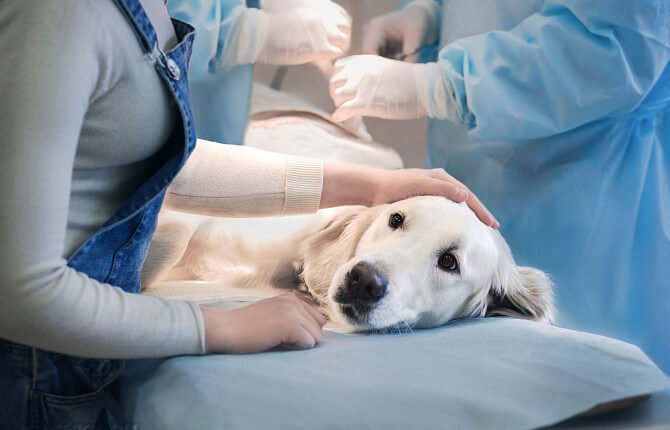
Methods of Anaesthesia
First of all, it draws attention to itself – itching. This is usually the leading symptom. Animals usually demonstrate it very clearly: itching, gnawing fur, rubbing their muzzle and belly on the floor, licking their paws. Skin lesions also usually do not go unnoticed – the skin turns red or darkens at the site of inflammation, thickens, swells. Scaly ridges, wounds, pustules appear.
Lesions of the skin occur more calmly and may not irritate the animal, but will be very noticeable to the owners. Baldness appears in limited areas or partial loss of wool, hair becomes dull, and tangles appear.
Most often, dermatological diseases develop slowly, gradually growing and affecting an increasingly large surface of the skin. You should not postpone a visit to a dermatologist, because over time the problem is complicated by secondary pathogens, as well as skin diseases and parasites common to humans and animals.
Local anesthesia for animals has several varieties, depending on the place and method of administration of the drug. The ability to use both independent manipulation and combined with general anesthesia. The main difference is the local effect on the area where the surgical intervention is performed while preserving the consciousness of the small patient.
Intravenous anesthesia is a type of general anesthesia (anesthesia) in which drugs for anesthesia (anesthetics – hypnotics and analgesics – painkillers) are administered only through an intravenous catheter into the bloodstream. This causes the patient to have a state of inhibition of the central nervous system, in which consciousness is turned off, skeletal muscles relax, reflexes are weakened or turned off, and pain sensitivity disappears. It is used in cases where a short-term and low-traumatic surgical intervention is planned or with combined anesthesia for performing difficult surgical interventions.
With this choice of anesthesia, the administration of anesthetic drugs is carried out with inhaled oxygen. The undoubted advantages of inhalation anesthesia include: low toxicity, the ability to easily control the depth of anesthesia (after stopping inhalation of the narcotic mixture, the patient wakes up within 2-3 minutes), the possibility of using it in long (more than 2 hours) operations. Inhalation anesthesia is the best choice for elderly animals, those with cardiovascular system defects, and exotic animals.
Anesthesiology is an independent branch of veterinary medicine that provides pain relief and protection of the body from excessive stimuli caused by surgical intervention and provides a number of measures that begin before the operation, continue during it and end in the postoperative period.
The Anesthesiology Department of the Veterinary Hub employs highly qualified specialists who control each stage of patient management, ensuring safety and necessary care. The presence of a large selection of drugs and the latest equipment for use in veterinary medicine makes it possible to reduce or completely eliminate pain sensitivity during surgical interventions and treatment, without suppressing consciousness, allowing the surgeon to perform a surgical operation qualitatively, preventing the harmful effects of general anesthetics.
Prices
-
Examination and consultation of a specialist doctor, anesthesiologist 850₴
-
Infiltration anesthesia 600₴
-
Conductive anesthesia 600₴
-
Epidural anesthesia 1100₴
-
Short-acting general anesthesia for cats and rabbits 950₴
-
Short-acting general anesthesia for rodents 950₴
-
Short-acting general anesthesia for dogs від 1000₴
-
Long-acting general anesthesia for cats and rabbits 1250₴
-
Long-acting general anesthesia for rodents 1050₴
-
Long-acting general anesthesia for dogs від 1450₴
-
General anesthesia using inhalation anesthesia від 800₴
Make an appointment
