
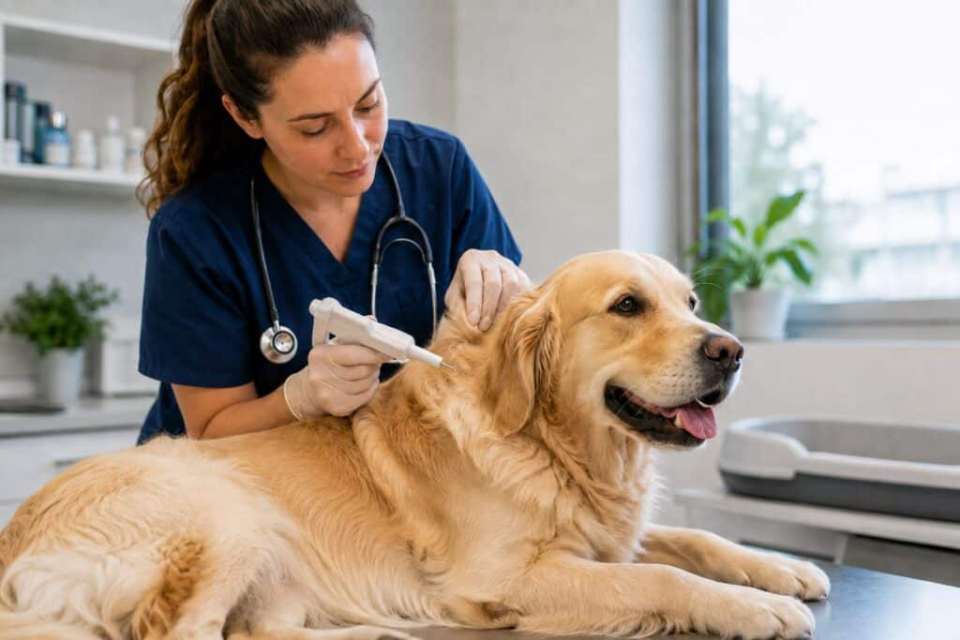
Microchipping is a reliable method of permanent pet identification using a chip with a unique number. The procedure is quick and resembles an ordinary injection, so animals tolerate it easily. The specific timing is worth clarifying with a vet. At HAB VET (Kyiv), microchipping costs 1000 ₴ and chip registration is 200 ₴. The clinic works 9:00–20:00.
A microchip permanently links an animal to its owner and greatly increases the chances of getting a pet back if it’s lost. It’s also an important part of the documents for international travel. Below you’ll find answers to the key owner questions: why microchip a pet, what the chip contains, how the procedure works, whether it hurts, from what age it’s done, and how much microchipping dogs and cats costs in Kyiv.
Why Microchip Dogs and Cats?
Microchipping is needed primarily for permanent identification of an animal and the ability to return it to its owner if lost. Unlike a collar or ID tag, which are easy to lose or remove, a microchip stays with the animal for life. In addition, microchipping is an important part of the documents for international travel with dogs and cats.
That’s why a microchip is considered one of the most reliable ways to protect an animal. It requires no maintenance, doesn’t bother the animal, and performs its function throughout the pet’s life. Let’s look at the two main reasons in more detail.
Identification and returning a lost pet
If a chipped animal gets lost and ends up at a clinic or shelter, specialists can read the chip’s unique number with a special scanner. This number is used to find the owner’s contacts in the registry, which greatly increases the chances of reunion. Without a chip, establishing who an animal belongs to is much harder.
Microchipping as a travel requirement
For international travel, a microchip is an important component of the animal’s identification and documents. Having a chip makes it possible to unambiguously link a specific animal to its veterinary passport and records, including vaccination of dogs and cats, which is a standard requirement when crossing borders.
What Is a Microchip and What Information Does It Contain?
A microchip is a tiny electronic carrier about the size of a grain of rice that contains a unique identification number. It’s important to understand: the chip itself stores only this number, not the owner’s name, phone, or address. All information about the animal and owner is linked to the chip’s number in an international registry.
A microchip has no power source of its own and activates only when a scanner is brought close to it. It is not a GPS tracker and doesn’t allow you to see the animal’s location in real time — its purpose is identification, not tracking. When a scanner reads the chip, it displays the unique number, which is used to find the owner’s contact details in the registry. This principle makes the microchip a simple, reliable, and durable solution that works throughout the animal’s life without needing replacement or recharging.
How Does the Microchipping Procedure for a Dog or Cat Work?
The microchipping procedure is simple and quick: the vet examines the animal, inserts the chip under the skin using a special single-use applicator, and registers the data. The whole manipulation resembles an ordinary subcutaneous injection and takes just a few seconds, so the animal needs no anesthesia or special preparation.
After inserting the chip, the specialist immediately checks it with a scanner to make sure the number reads correctly. Then the animal’s and owner’s data are linked to the unique number in the registry. You can learn more about the service on the microchipping at HAB VET page.
How the microchip is inserted
The microchip is inserted under the skin using a sterile single-use applicator, most often in the area of the withers. The procedure is quick and requires no incisions or stitches — the chip is simply implanted subcutaneously, similar to an ordinary injection.
Data registration after chipping
After the chip is inserted, the animal’s and owner’s data are linked to the chip’s unique number in an international registry. It’s precisely thanks to this registration that the number becomes useful: it’s used to find the owner’s contacts, so it’s important that the information is entered correctly.
Is Microchipping Painful for a Dog or Cat?
Microchipping is practically painless and animals tolerate it easily. In terms of sensation, the procedure is similar to an ordinary subcutaneous injection: the animal may feel a brief prick, but the discomfort passes almost immediately. Anesthesia is usually not needed for microchipping, and the manipulation itself takes only a few seconds, so there’s no lengthy or stressful process for the pet.
Most dogs and cats react calmly to the procedure and quickly forget about it. Since the chip is inserted subcutaneously without incisions, it leaves no wounds requiring complex care, and the animal can return to its usual routine right away without limits on activity or feeding.
If you have concerns about how your animal will tolerate the procedure, you can always discuss this with the vet right before microchipping. The specialist will examine your pet, answer your questions, and advise how to make the visit as calm and comfortable as possible, especially if the animal is sensitive or visiting the clinic for the first time.
At What Age Can a Pet Be Microchipped?
Both young and adult animals can be microchipped — age itself is not an obstacle to the procedure. A microchip works equally well regardless of when it was installed, so microchipping is available both to puppies and kittens and to adult dogs and cats that didn’t have a chip before.
As for the optimal timing for microchipping young animals, the specific timeframe is best clarified with a vet, since it may depend on the individual features of the animal and the owner’s plans, including travel. If you take in an adult animal from a shelter or previous owners, it’s worth checking whether it’s already chipped and doing the procedure if needed. In any case, the vet will advise exactly when it’s appropriate to chip your pet.
How Much Does Microchipping Dogs and Cats Cost in Kyiv?
At HAB VET, microchipping dogs and cats costs 1000 ₴, and registering the chip in an international registry is 200 ₴. These prices are fixed and clear in advance, so owners can plan their expenses before the visit. Registration is an important part of the procedure, since it’s precisely what links the chip’s number to the animal’s and owner’s data.
Keep in mind that during the visit the vet may recommend other procedures depending on the animal’s needs — for example, if microchipping is planned together with travel preparation. The exact list and cost will depend on the specific situation, so they’re best clarified directly at the clinic. To find out the details and choose a convenient time, it’s convenient to book an appointment at HAB VET right away.
Frequently Asked Questions
Can I find a lost dog via GPS in the microchip?
No, a microchip is not a GPS tracker and doesn’t let you see the animal’s location in real time. It contains only a unique identification number that’s read by a special scanner up close. A chip helps find a lost animal differently: if it’s found and brought to a clinic or shelter, the number is used to find the owner’s contacts in the registry.
Does the microchip need to be replaced over time?
No, a microchip is designed for the animal’s entire lifetime and doesn’t need replacement. It has no battery, doesn’t discharge, and requires no maintenance. The main thing is to keep the contact details in the registry up to date: if you’ve changed your phone number or address, the information should be updated so the chip’s number connects to you.
Where is the data stored after chipping?
The microchip itself stores only the unique number. All information about the animal and owner is linked to this number in an international registry. When a scanner reads the chip, it shows the number, which is used to find the owner’s contact details in the registry. That’s why it’s important that the data is entered correctly after the procedure and updated in a timely way when needed.
Can an already-adult animal be microchipped?
Yes, an animal of any age can be microchipped, including an adult dog or cat. The procedure is the same regardless of age and just as simple and quick. This is especially relevant if you’ve taken in an adult animal that wasn’t chipped before, or you’re unsure whether it has a chip — at the clinic this can be checked with a scanner.
What should I do after the microchipping procedure?
Microchipping requires no special care, since it leaves no wounds needing treatment. After the procedure, make sure the data is entered correctly in the registry and keep the information about the chip number. Going forward, the main thing is to update contact details promptly if they change, so the microchip reliably performs its identification function throughout the animal’s life.
Book Microchipping at HAB VET
Want to reliably protect your pet and prepare it for possible travel? At HAB VET in Kyiv, the vets will perform the microchipping, register the data in an international registry, and answer all your questions. The clinic is open daily from 9:00 to 20:00. You can choose a convenient time and book microchipping today.
